


What a referral code is
A referral code is a short identifier that links your new account to the person or website that introduced you to the exchange. The exchange uses it to pay the referrer a share of the trading fees you generate, as a reward for bringing in a customer.
Many exchanges also share part of that reward with you, the new user, in the form of a trading-fee discount, a sign-up bonus, or both. That is the "up to 20% off fees" you see advertised. The exchange does not lose money on this; it treats the discount as a marketing cost, in the same way a shop might give a coupon to customers referred by a friend.
When the code must be applied
This is the single most important practical point: on most exchanges, a referral can only be attached when the account is created. Once your account exists, there is usually no field to add one later, and support will not add it for you.
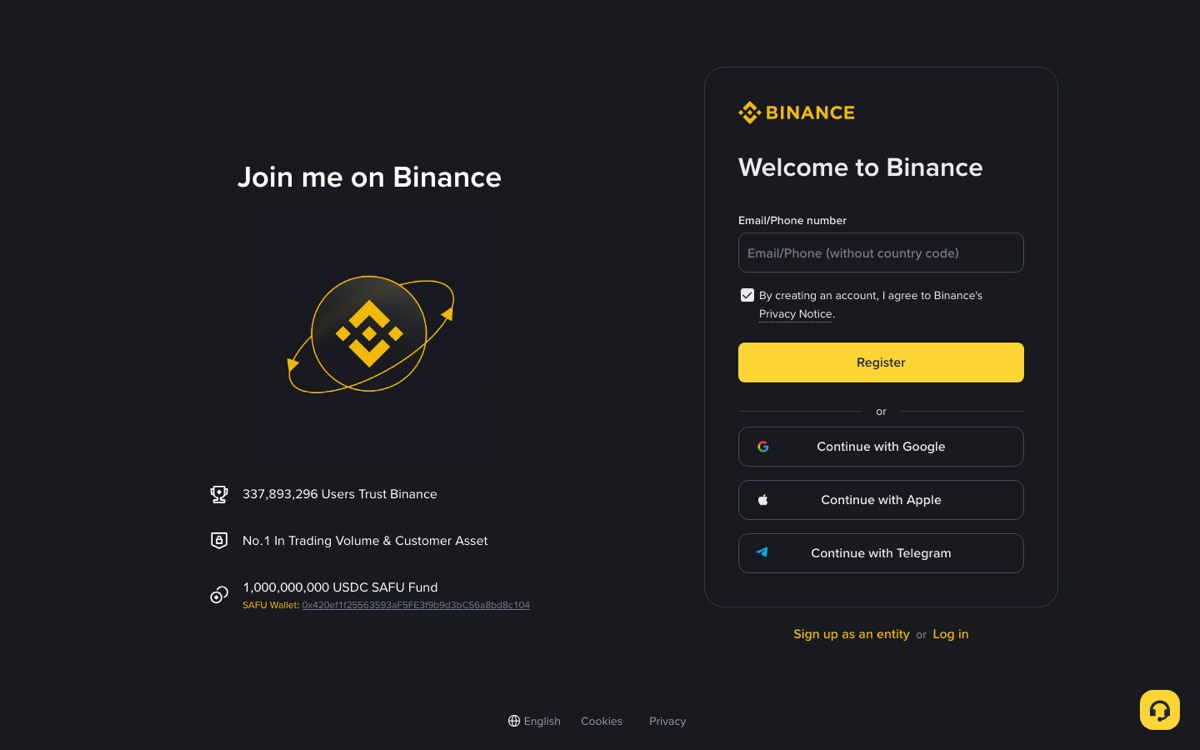
On today's large exchanges the code is often attached by the sign-up link itself rather than typed into a box. When you open a referral link, the exchange stores the referrer in your browser session; if you then complete registration in the same browser without navigating away, the referral is applied. Some exchanges also show an optional "referral code" field on one of the registration steps. Either way, the rule is the same: decide before you sign up.
How much it saves, with real numbers
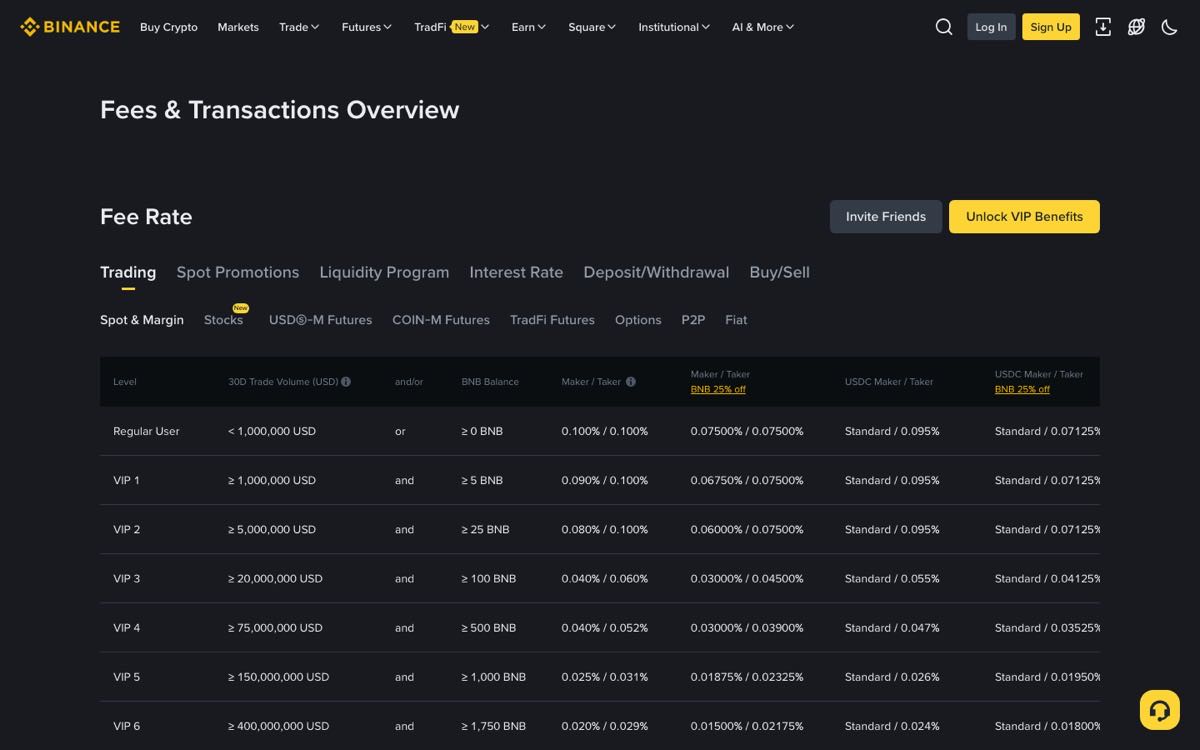
Trading fees are a percentage of each trade. On the standard tier, the spot fee on major exchanges is around 0.1% for both makers and takers. Futures fees are lower per trade, often around 0.02% for makers and 0.05% for takers, but futures traders usually trade much larger amounts.
A 20% referral discount reduces a 0.1% fee to 0.08%. On a single $500 purchase that is a saving of ten cents — almost nothing. The value appears with volume: someone who trades $10,000 a month on spot pays about $120 a year in fees and would save about $24 with the discount; an active futures trader moving $200,000 a month could save several hundred dollars a year.
So, honestly: if you only plan to buy USDT once and hold it, a referral discount barely matters. If you plan to trade regularly, it is one of the few ways to lower your costs permanently for as long as the exchange keeps the programme running.
Calculate it for your own trading
Our fee calculator takes your monthly spot and futures volume and shows the yearly fees on each major exchange, with and without the referral discount. Use your realistic volume, not your hopes: most beginners trade far less than they expect, and that is fine.
The fine print worth reading
- Duration: some discounts last for the life of the account, others for a fixed period such as one year. The exchange decides and can change the programme.
- Products: the discount may apply to spot only, or to spot and futures, and usually not to P2P, which is often fee-free anyway.
- Combination: discounts may or may not stack with VIP levels or paying fees in the exchange's own token.
- Bonuses: sign-up bonuses often come as vouchers that require a deposit, a minimum amount of trading, or completion within a deadline.
- Price: a referral code never changes the price of the coin you buy. It only affects fees and bonuses.
How USDTSO is paid, plainly
When you open an account through a sign-up button on this site, the exchange may pay us a share of the fees you generate. You do not pay anything extra; in most programmes you pay less because of the discount.
We show all four exchanges in the same tables, with the same fee data and the same warnings, whether or not we currently have a referral link with them. If we do not have a link for an exchange, its sign-up button is simply hidden. And if an exchange is not available in your country, no referral is worth using it.
You can always open an account without any referral by typing the exchange's address yourself. Use a referral only if the discount matters to you and you trust the site recommending it.
Referral scams to avoid
- "Referral code required for verification": no exchange requires a specific stranger's code to verify your account.
- Codes posted under fake "support" profiles that send you to a look-alike registration page. Check the address bar before you type anything.
- "Guaranteed bonus" schemes that ask you to deposit to an address they provide. Bonuses are paid by the exchange inside your account, never by sending money to someone.
- Groups that pay you to register accounts with your ID for others to use. This is identity fraud and can make you liable for what the account is used for.
Already have an account without a code?
Then keep it. Opening a second account just to get a discount usually breaks the exchange's terms, can lead to both accounts being restricted, and saves little unless you trade heavily. Many exchanges let you lower fees in other ways: higher VIP levels from volume, paying fees in the exchange's own token, or maker-only limit orders, which are often cheaper than taker orders.
Questions people ask us
"Does using a referral make my account less safe?" No. The referrer cannot see your balance, trades or personal details. They only see aggregated commission reports.
"Can the referrer contact me?" Not through the exchange. If someone claiming to be your referrer messages you, treat it as a stranger's message.
"What if the exchange cancels the programme?" Then the discount ends for everyone. Your account and funds are unaffected.
"Is a bigger advertised discount always better?" Not necessarily. A large discount on an exchange with high base fees, poor P2P liquidity in your currency, or no licence in your country is worth less than a smaller discount on a platform that fits you.
Where the money for referrals comes from
Exchanges earn most of their revenue from trading fees. Every time you buy or sell, a small percentage goes to the exchange. A referral programme simply promises to share a slice of that revenue with whoever brought you in, and often a slice with you as well. Nothing is taken from your balance and nothing is added to the price of the coin.
This is why referral rewards are always expressed as a percentage of fees, and why they grow only when you trade. If you never trade, nobody earns anything from your account — not the exchange, not the referrer, and not you.
It also explains why exchanges compete hard on referral terms: acquiring an active trader is valuable to them, and sharing part of the fee is cheaper than many forms of advertising.
Comparing referral offers between exchanges
When two exchanges both advertise "20% off", the real difference lies elsewhere. Compare the base fee before the discount, whether the discount covers futures, how long it lasts, and whether you can reduce fees further by paying in the exchange's own token. A 20% discount on a 0.1% base fee and a 20% discount on a 0.08% base fee are not the same offer.
Also compare what matters more than fees for a beginner: whether the exchange serves your country, how deep its P2P market is in your currency, and how good its security features and support are. A cheaper fee is never worth a platform you cannot use legally or safely.
How to check the referral was applied
After registering, open the referral or rewards section of your account. Many exchanges show whether you were invited and by which code, and some show your discount in the fee settings. If nothing appears, contact support within the first few days and ask; some exchanges can still link a referral shortly after sign-up, but very few can do it weeks later.
In short
Apply a referral only at sign-up, through the link or the optional field; expect savings that grow with how much you trade; read the exchange's current terms; and never let a referral decide which exchange you use if another one fits your country and needs better.